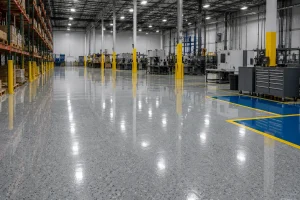

A smooth painted surface depends on more than choosing the right color. The application method has a major effect on how even, clean, and consistent the finished surface looks. Spray painting is widely used for walls, ceilings, doors, trim, metalwork, cabinetry, and other surfaces where uniform coverage and a refined appearance are important.
Unlike brushes and rollers, spray equipment breaks paint into fine droplets and distributes them across the surface in a controlled pattern. When the surface is prepared correctly and the equipment is properly adjusted, this method can create an even paint layer without visible brush strokes or roller texture.
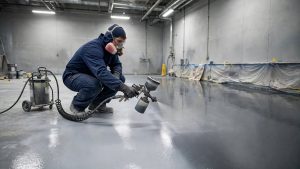
Spray painting works by atomizing liquid paint and directing it toward a surface through a spray gun or nozzle. The fine droplets overlap as they land, creating a continuous coating.
This controlled distribution is one of the main reasons a professional spray painting finish can appear so smooth. Brushes physically drag paint across a surface, while rollers can leave a slight stippled texture. Spraying applies the coating without direct contact between an applicator and the surface.
The final quality, however, depends on technique. Spray pressure, nozzle size, paint viscosity, distance from the surface, and movement speed all influence how the coating settles.
Large walls and ceilings can be difficult to coat uniformly by hand, particularly when the finish needs to remain consistent from one section to another. Spray painting allows the applicator to maintain a steady pattern across broad areas.
Each pass should slightly overlap the previous one. This helps prevent visible bands, thin spots, and uneven color. Maintaining a consistent distance and keeping the spray gun perpendicular to the surface also reduces variations in coating thickness.
A spray gun can apply paint smoothly, but it cannot correct a poorly prepared surface. Cracks, dents, dust, grease, peeling coatings, and rough patches may remain visible after painting and can interfere with adhesion.
Preparation may involve cleaning the surface, filling holes, repairing damaged areas, sanding rough sections, and removing loose material. Primer may also be required depending on the substrate and coating system.
Sanding is particularly useful when a highly refined finish is needed. It creates a more uniform base and can reduce small imperfections that might otherwise become noticeable once the paint dries.
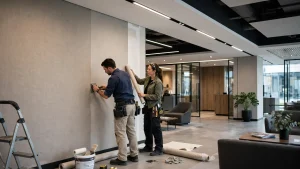
Interior finishing projects often involve coordinating several different surfaces and materials. The principles discussed in Wallcovering Installation Tips for Modern Commercial Interiors are also relevant here because careful preparation, clean transitions, and attention to surrounding finishes all contribute to a more polished interior.
Flat walls are only one application for spray painting. The technique is especially useful for surfaces containing grooves, corners, decorative profiles, narrow edges, or repeated details.
Doors, cabinets, railings, shelving, trim, and architectural features can contain areas that are awkward to reach with a roller. A properly controlled spray pattern can distribute paint into these sections while keeping the visible finish consistent.
This does not eliminate the need for careful technique. Spraying too heavily into corners or recessed areas can cause paint buildup and runs. Several controlled passes are often preferable to applying an excessively heavy coat at once.
Professional spray painting requires matching the equipment setup to the coating and surface. A nozzle that produces an unsuitable spray pattern can create uneven coverage, while excessive pressure may increase overspray.
Paint also needs the correct consistency for the equipment being used. If a coating is too thick for a particular setup, it may not atomize evenly. If application is too heavy, the paint may sag or run before it has time to settle.
The operator must also maintain steady movement. Moving too slowly can deposit too much paint in one area, while moving too quickly may leave sections with insufficient coverage.
One limitation of spray painting is that fine paint particles can travel beyond the intended surface. Proper masking and site preparation are therefore essential.
Floors, windows, fixtures, furniture, outlets, hardware, and adjoining finished surfaces may need protection before spraying begins. In occupied or partially completed interiors, controlling the work area becomes especially important.
Ventilation and the coating manufacturer’s safety instructions should also be considered. The appropriate protective measures depend on the paint product, spray equipment, and working environment.
Spray application can be particularly useful when a project includes large uninterrupted surfaces, detailed architectural elements, multiple doors, cabinetry, or areas where visible applicator marks would be undesirable.
It is not automatically the right choice for every painting job. Small touch-ups, confined spaces, or areas requiring extensive masking may sometimes be handled more efficiently with a brush or roller. In some projects, methods are combined. A surface may be sprayed for broad coverage while brushes or rollers are used for specific edges, repairs, or restricted areas.
Choosing the application method should therefore depend on the surface, coating type, surrounding conditions, and desired finish rather than appearance alone.
A consistent spray painting finish starts with controlled application. The spray gun should generally remain at a steady distance from the surface, with each pass following a predictable path. Sudden changes in angle or speed can create uneven paint distribution.
Testing the spray pattern before beginning the main surface is also useful. A test area can reveal problems with pressure, paint flow, or nozzle selection before they affect the finished work.
Allowing each coat to dry according to the coating manufacturer’s instructions is equally important. Applying another coat too early can interfere with how the paint settles and cures.
Spray painting creates a smooth professional finish by applying paint as a controlled layer of fine droplets rather than physically spreading it with a brush or roller. This makes it well suited to broad surfaces, detailed features, doors, cabinetry, trim, and other areas where uniform coverage matters.
The quality of the result still depends on preparation, equipment setup, masking, spray technique, and suitable drying conditions. When these factors are handled carefully, spray painting can produce a clean, consistent surface with minimal visible application texture.

Professional painting services designed to refresh, protect, and transform your space with lasting color, clean finishes, and reliable care.