
Modern commercial spaces demand finishes that combine durability, style, and long-term value. Wallcovering Installation plays a vital role in creating professional interiors that withstand daily wear while maintaining a polished appearance. Proper planning, material selection, and expert installation directly affect performance and lifespan.
When we follow proven installation practices, commercial wallcoverings remain attractive for many years while reducing maintenance costs. Every stage, from surface preparation to final inspection, contributes to a successful result that meets both design and functional expectations.
Businesses increasingly choose commercial wallcoverings because they resist impact, hide surface imperfections, and offer countless design options. Hotels, offices, healthcare facilities, schools, and retail stores benefit from these practical finishes.
Professional installers understand substrate conditions, adhesive selection, and environmental factors that influence performance. These details help prevent peeling, bubbling, and seam failure while delivering consistent, high-quality results.
A successful wallcovering installation begins long before the first panel reaches the wall. Every commercial project requires accurate measurements, careful planning, and detailed surface evaluation. Even premium wallcovering products cannot perform well if installed over damaged or uneven substrates.
Professional installation delivers several advantages:
Improves long-term durability.
Creates seamless visual appeal.
Reduces future maintenance costs.
Protects walls from daily wear.
Extends product lifespan.
Businesses that invest in skilled installation often experience fewer repairs and lower replacement expenses throughout the life of the building.
Surface preparation determines the final quality of any Wallcovering Installation. Walls should remain clean, dry, smooth, and structurally sound before adhesive application. Installers repair cracks, remove loose paint, sand rough areas, and fill imperfections to create a uniform base.
Moisture testing also prevents future failures. Excess moisture may weaken adhesives and cause mold growth behind wallcoverings. Commercial projects often include moisture meters as part of quality control before installation begins.
Different commercial environments require different wallcovering materials. High-traffic facilities need products that resist scratches, stains, and repeated cleaning. Designers also consider fire ratings, maintenance needs, and acoustic performance.
| Commercial Space | Recommended Material | Primary Benefit |
|---|---|---|
| Offices | Vinyl Wallcovering | Durable and easy to clean |
| Hotels | Textured Vinyl | Luxury appearance |
| Healthcare | Antimicrobial Wallcovering | Better hygiene |
| Retail Stores | Decorative Vinyl | Strong visual impact |
| Educational Buildings | Heavy-Duty Vinyl | Excellent wear resistance |
Material selection should always align with building codes and manufacturer recommendations.
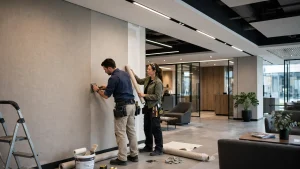
Professional Wallcovering Installation relies on precise alignment and careful handling throughout the project. Installers establish reference lines before hanging each panel to maintain consistent patterns across large wall surfaces.
Key installation practices include:
Use manufacturer-approved adhesives.
Maintain consistent room temperature.
Align seams carefully.
Remove trapped air immediately.
Trim edges using sharp blades.
Inspect every panel after installation.
These practices reduce visible defects and create a clean, professional finish that meets commercial quality standards.
Many installation failures result from rushing the preparation process or ignoring environmental conditions. Incorrect adhesive selection and poor wall preparation often lead to expensive repairs.
Common mistakes include:
Installing over damp walls.
Skipping surface priming.
Misaligned pattern matching.
Using excessive adhesive.
Ignoring curing times.
Failing final quality inspections.
Experienced installers follow manufacturer guidelines throughout the project. This disciplined approach minimizes callbacks and increases customer satisfaction. Explore our latest insights in Why Modern Businesses Are Investing in Durable Floor Coatings.
Routine maintenance extends the life of every Wallcovering Installation. Commercial facilities should establish regular cleaning schedules based on traffic levels and manufacturer recommendations. Most vinyl wallcoverings only require mild soap and water for routine cleaning.
Facility managers should inspect walls periodically for loose seams, impact damage, or moisture intrusion. Addressing small issues early prevents larger repairs and preserves the appearance of the entire interior. Preventive maintenance often reduces long-term operational costs while maintaining a professional environment for employees and visitors.
Commercial interior specialists recommend involving wallcovering installers during the early design phase. Early collaboration helps identify substrate requirements, estimate material quantities accurately, and coordinate installation with other construction activities.
Industry professionals also emphasize purchasing quality materials from reputable manufacturers instead of choosing products based only on price. Premium wallcoverings generally provide better durability, easier maintenance, stronger warranties, and improved overall performance in demanding commercial environments.
Professional Wallcovering Installation combines preparation, quality materials, and skilled craftsmanship. Every installation step influences long-term performance and appearance. By following proven installation practices and maintaining finished surfaces properly, commercial interiors remain attractive, durable, and cost-effective for many years.

Professional painting services designed to refresh, protect, and transform your space with lasting color, clean finishes, and reliable care.